
Outreach & Follow-Up
12 published articles
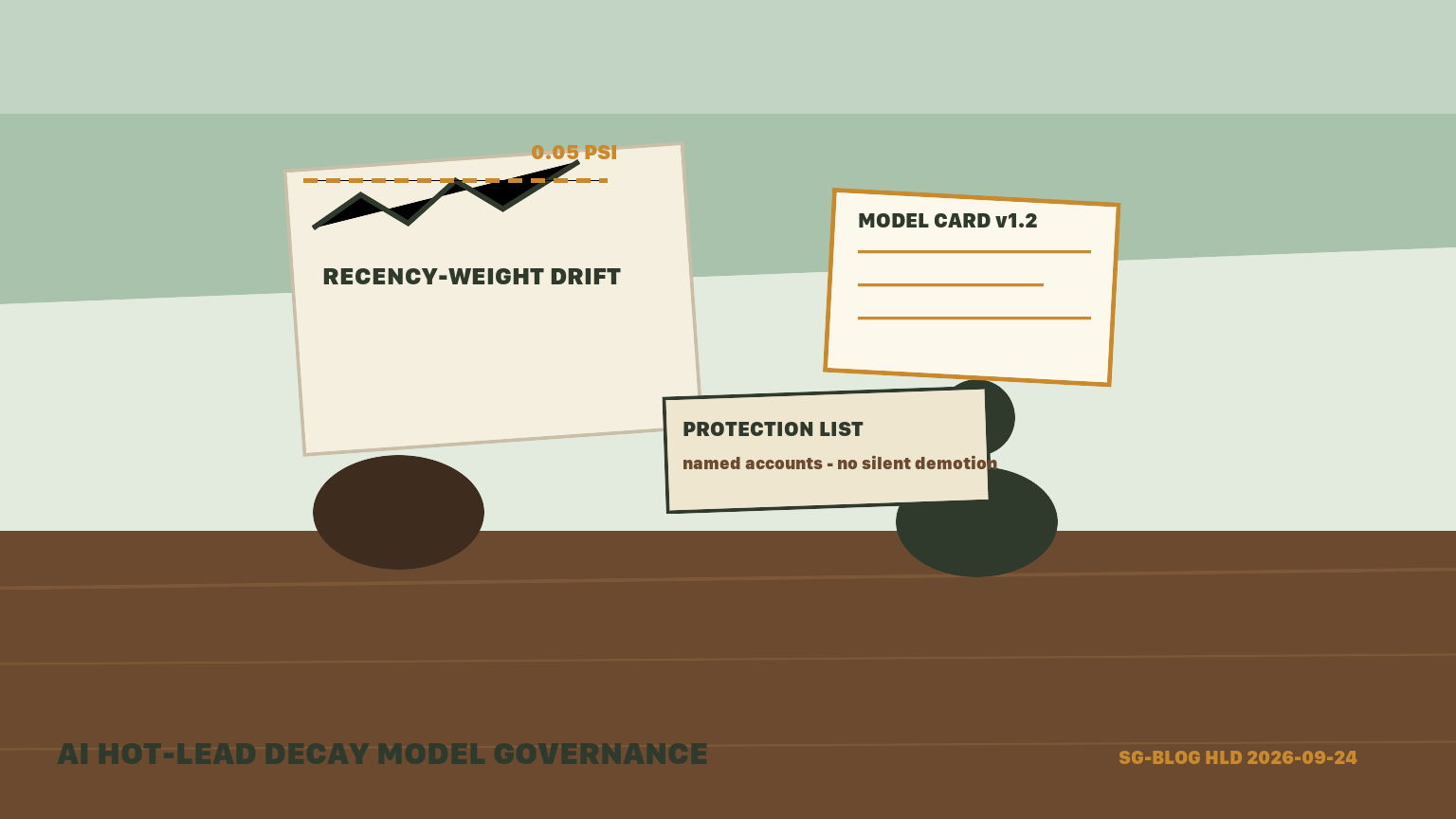
AI Hot-Lead Decay Model Governance in 2026 — Recency-Weight Drift, Retraining Triggers, and a Named Revenue-Ops Ratifier
AI hot-lead decay model governance sets the 0.05 PSI drift trigger, names the revenue-ops ratifier with veto power, and protects named accounts from silent score demotion.
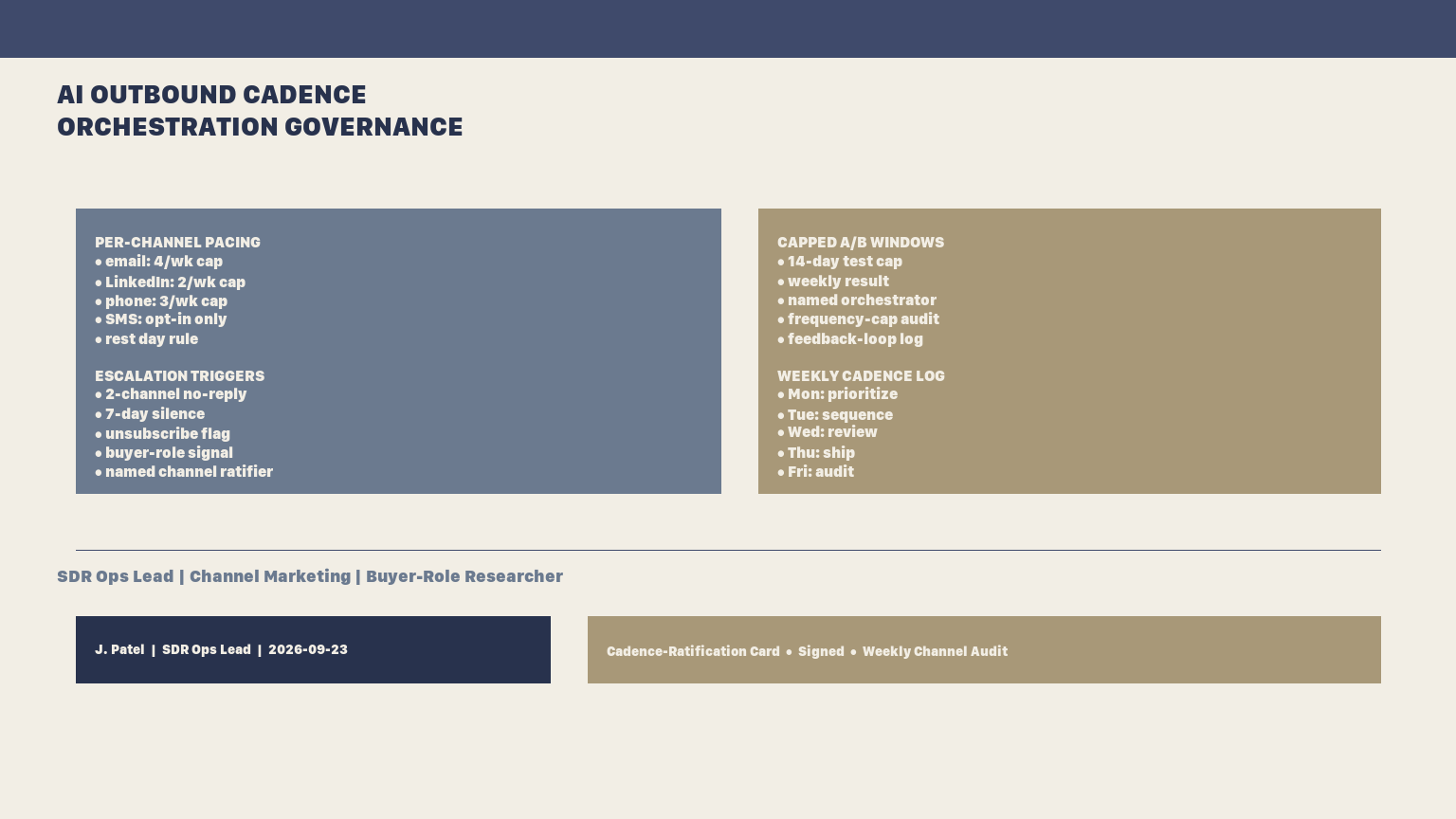
AI Outbound Cadence Orchestration Governance in 2026 — Per-Channel Pacing, Capped A/B Windows, and a Named Channel Ratifier
AI outbound cadence orchestration governance decides the per-channel pacing caps, escalation triggers, capped A/B windows, and which named channel ratifier vetoes a cadence tweak before it touches a Tier-1 buyer.
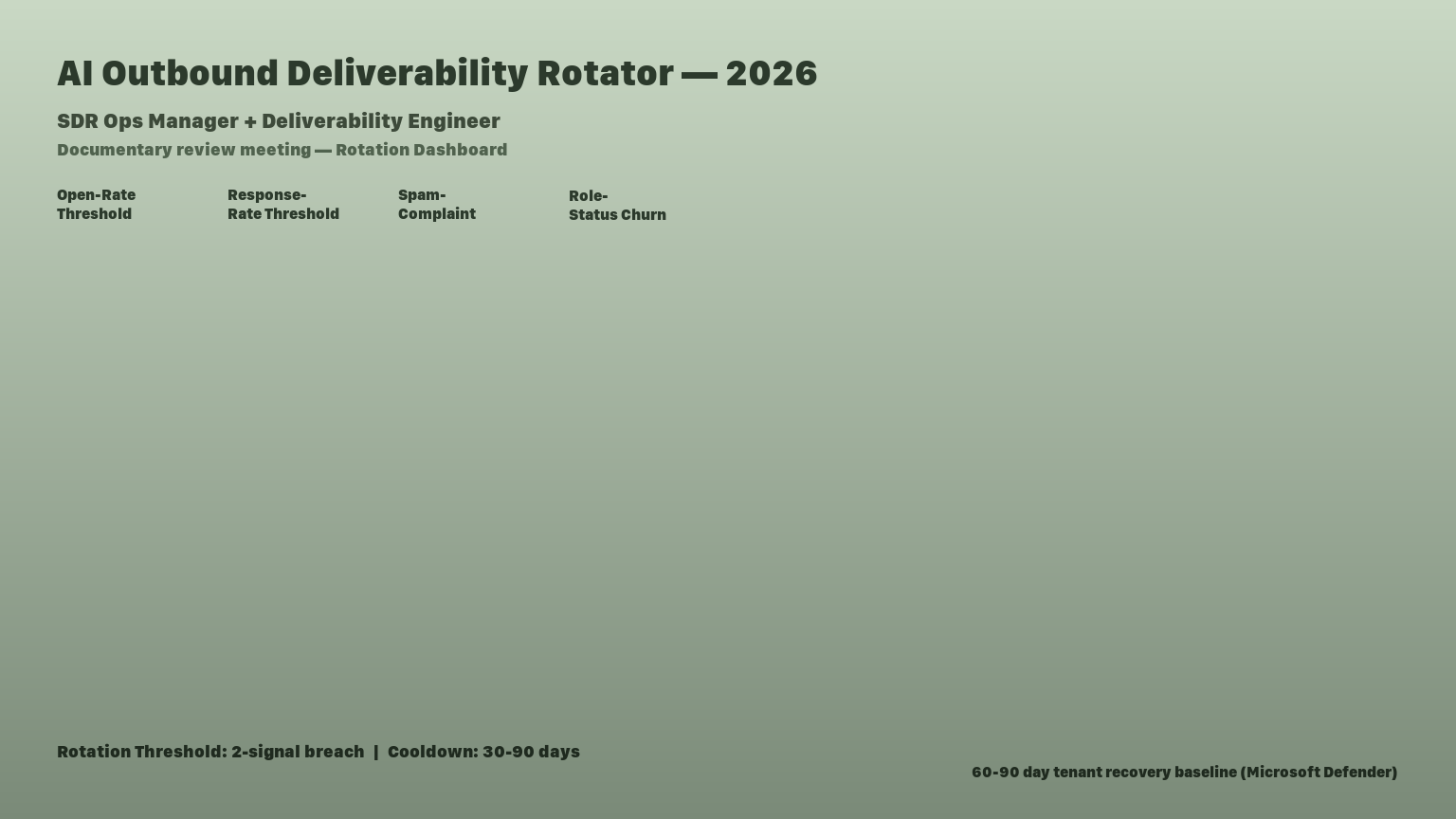
AI Outbound Deliverability Rotator in 2026 — Move the Agent Off Declining-Engagement Cohorts Before They Hit Spam Traps
An AI outbound agent that fails to rotate off declining-engagement cohorts is a single-point-of-failure for the entire domain's deliverability — once a tenant-level throttle fires, recovery is 60-90 days and every active campaign in the tenant degrades.
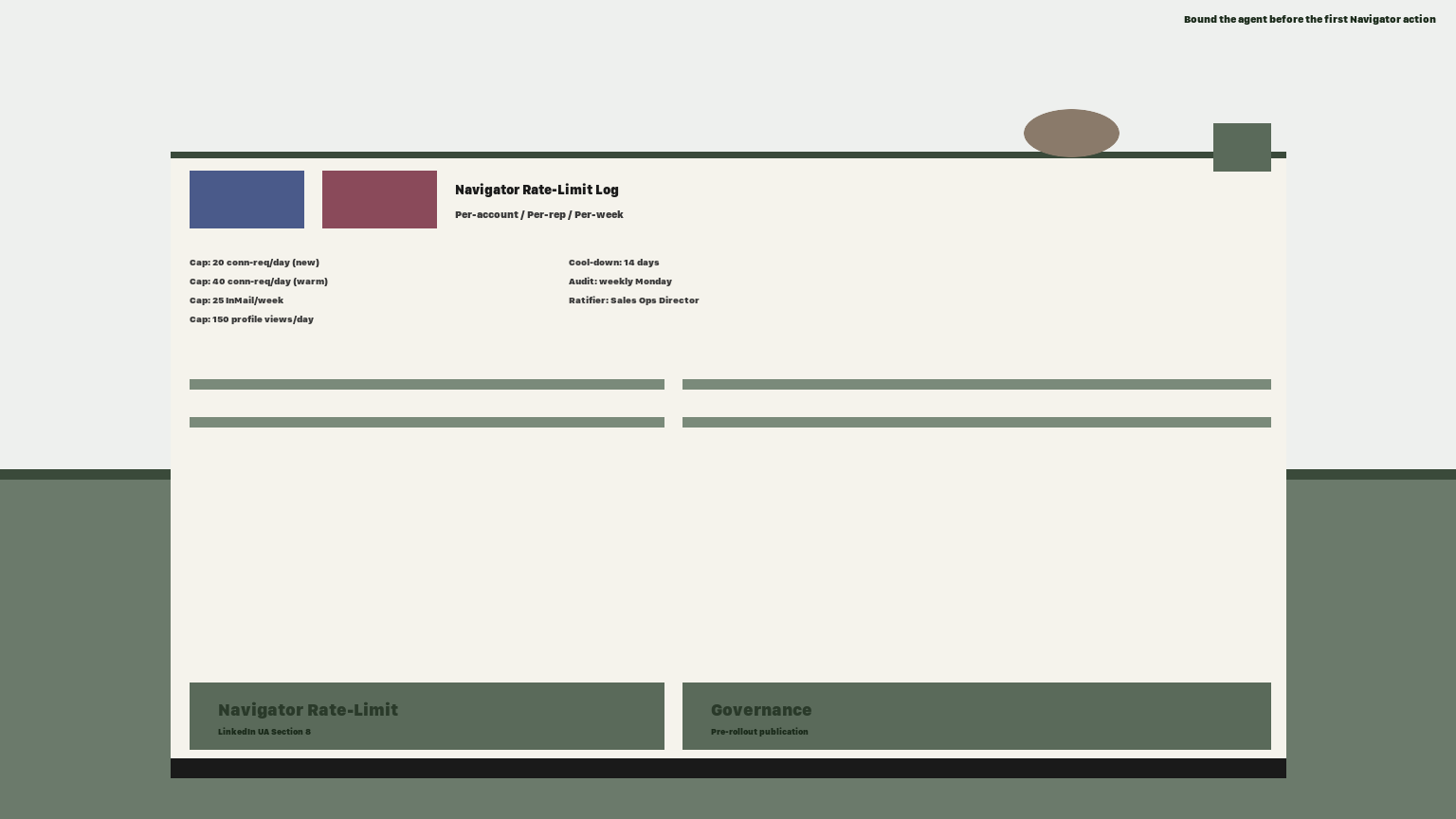
AI Sales Navigator Rate-Limit Governance in 2026 — Bound the Agent's Outreach Cadence Before the Account Gets Restricted
Bound the agent's outreach cadence to the platform's tolerance envelope before the first connection request is sent, not after the first restricted account.
Agentic LinkedIn Outreach Sequences in 2026 — Govern Profile Verification, Signal Triggers, and Rate Limits
Every sales development leader eventually notices the same pattern, and it is never in the dashboard. The agentic LinkedIn sequence that produced a clean pipeline in pilot starts.

AI Cold Calling in 2026 — Consent, Disclosure, and Transcript Evidence Before Autonomy
Run AI cold calling inside a consent-first envelope: TCPA artificial-voice rules, prior written consent, DNC scrubbing, machine disclosure, transcripts, and human escalation.

AI Outbound Consent in 2026 — Gate Every Agentic Send on Lawful Basis
A per-recipient lawful-basis ledger gates every agentic outbound send on recorded GDPR consent, objection handling, and CCPA opt-out propagation.

AI Sales Engagement in 2026 — Build a Reply State Machine Before Automating Follow-Up
Build a reply-state machine before automating follow-up: eight evidence-bound reply states, fixed precedence, terminal stop signals, and one permitted next action per transition.

Human Escalation Design for AI SDR Programs
An AI SDR escalation can fail even when a human receives an alert. The wrong owner, missing context, an unpaused follow-up, or an outdated approval can leave the original risk intact. Design the full transfer of control, from the first trigger through an explicit decision about whether the conversation may resume.

Guardrails for AI Sales Agents in B2B Outreach
An AI sales agent needs a clear boundary between suggesting an action and being allowed to execute it. Effective guardrails make that boundary enforceable across research, drafting, CRM updates, and outreach. This article proposes a practical control design for revenue teams that want automation to operate within explicit permissions, with visible exceptions and a dependable way to stop.

A Quality Standard for AI Personalization in B2B Sales
Personalization earns its place in a B2B message when it is accurate, relevant to the recipient's work, proportionate, and useful to the proposed conversation. Inserting more facts does not automatically meet that standard. This article defines an editorial review method for AI-assisted outreach, with clear rejection conditions and practical ways to improve a draft without inventing familiarity.

Deliverability Controls for AI-Scaled B2B Outreach
AI can increase the amount of outreach prepared faster than a team can inspect recipient eligibility, sender configuration, or negative feedback. Deliverability control begins by limiting what is allowed to enter the sending queue. It continues through authentication, suppression, coordinated sending, and a clear decision about when to pause. Message generation is only one part of that operating system.